Humility Definition: Meaning, Examples, and More For 2026
Humility means having a modest view of yourself without thinking you are better than others. It does not mean having low self-esteem or hiding your talents.
A humble person can know their strengths while still respecting other people. Humility helps us listen, learn, admit mistakes, and share credit.
It can appear in simple actions, such as saying thank you, accepting advice, or helping someone without seeking praise.
The humility definition is useful in everyday life because it describes a balanced way of seeing yourself and others. In simple terms, humility means being confident without becoming proud or arrogant.
1. What Is the Definition of Humility?
The basic humility definition is the quality of having a modest and realistic view of your own importance, abilities, and achievements.
A humble person does not need to prove that they are better than everyone else. They can feel proud of good work without using success to look down on others.
Humility also means being open to the fact that you do not know everything. A humble person can say, “I was wrong,” “I need help,” or “I do not know.” These simple words can show strength rather than weakness.
For example, imagine a student receives the highest grade in a class. Instead of saying, “I am smarter than everyone here,” the student might say, “I worked hard, and I am grateful for the help I received.”
That attitude shows humility.
2. What Does Humility Mean in Simple Words?
In simple words, humility means knowing your worth without thinking you are worth more than everyone else.
It is a healthy middle ground between arrogance and having no confidence.
A humble person may recognize their skills, success, or knowledge. They simply do not feel the need to use those things to make others feel small.
Think of humility as saying:
- “I have strengths, but I also have things to learn.”
- “I did well, but others helped me too.”
- “I can be proud without being boastful.”
- “Other people have valuable ideas.”
- “Making a mistake does not make me worthless.”
Humility is not about pretending you are less capable than you really are. It is about seeing yourself honestly and fairly.
3. What Are the Main Traits of Humility?
Humility can show up in many parts of life. It is not just one behavior.
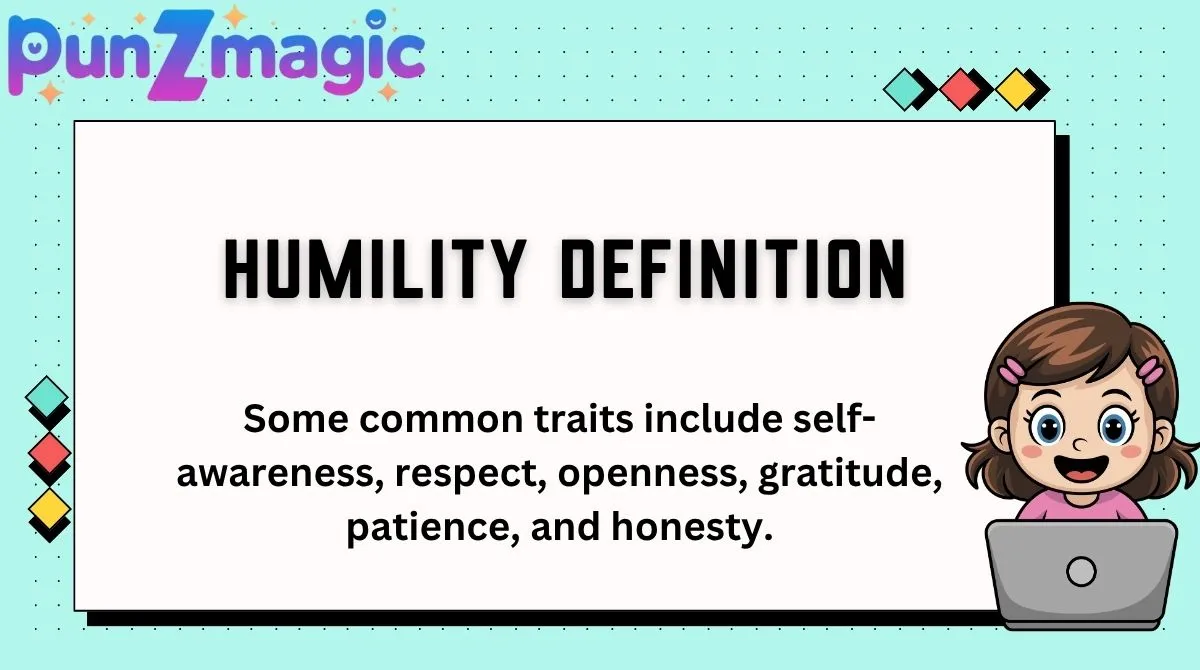
Some common traits include self-awareness, respect, openness, gratitude, patience, and honesty.
A humble person often listens before speaking. They can accept useful criticism without becoming defensive. They give credit to people who helped them and do not always need attention.
Humility also involves self-awareness. This means understanding both your strengths and your weaknesses.
For example, a talented manager may know they are good at planning but admit that another team member is better at public speaking. Instead of feeling threatened, the manager may ask that person for advice.
This is humility because the person understands that different people have different strengths.
4. Is Humility the Same as Being Humble?
Yes. Humility is the quality, while humble is the adjective used to describe someone or something that shows that quality.
For example:
- “Her humility made her easy to work with.”
- “She is a humble person.”
- “He showed humility after winning the award.”
- “He remained humble despite his success.”
The word humility usually describes the attitude or quality itself. The word humble describes a person, action, or attitude.
Both words are closely connected, but they are used differently in a sentence.
5. Humility vs. Arrogance
Humility and arrogance are often seen as opposites.
Arrogance involves having an inflated sense of your own importance or abilities. An arrogant person may believe they are better or more deserving than others.
Humility, by contrast, allows a person to recognize their abilities while respecting other people.
| Humility | Arrogance |
|---|---|
| Accepts mistakes | Blames others |
| Listens to advice | Rejects criticism |
| Shares credit | Takes all the credit |
| Respects others | Looks down on others |
| Admits limits | Pretends to know everything |
| Learns from people | Assumes they know best |
This does not mean a confident person is arrogant. Confidence and humility can exist together.
A person can confidently say, “I am good at this,” while also saying, “I still have more to learn.”
6. Examples of Humility in Everyday Life
Humility is easier to understand when we see it in real situations.
At school:
A student gets a high grade and thanks their teacher and classmates for their support instead of bragging about being the smartest person in class.
At work:
A manager accepts an employee’s suggestion because it is better than their original idea.
In sports:
An athlete wins a game but praises the whole team instead of acting as if they won alone.
In friendship:
A friend realizes they gave bad advice and honestly admits it.
At home:
A parent listens to a child’s opinion instead of assuming that age always makes them right.
Online:
Someone receives praise for a creative post but responds kindly rather than attacking people who disagree.
These examples show that humility is often found in small choices, not dramatic acts.
7. Why Is Humility Important?
Humility can improve the way people learn, communicate, and build relationships.
When you are humble, you are more willing to listen. You can learn from people who have different experiences or skills. You are also more likely to accept helpful feedback.
Humility can make teamwork easier because people do not have to compete for all the attention. A humble team member can recognize another person’s contribution and focus on the shared goal.
It can also help with personal growth. If you believe you already know everything, learning becomes difficult. If you accept that there is always something new to learn, you stay curious.
Humility does not guarantee perfect relationships or decisions. However, it can encourage respect, openness, and thoughtful behavior.
8. What Is the Difference Between Humility and Low Self-Esteem?
Humility and low self-esteem are not the same thing.
Low self-esteem means having a negative or overly critical view of yourself. A person with low self-esteem may believe they are not good enough, even when there is evidence that they are capable.
Humility is different. A humble person can recognize their value while understanding that other people have value too.
For example, compare these two statements:
Low self-esteem:
“I am not talented. I probably cannot do this.”
Humility:
“I am good at this, but I still have things to learn.”
The first statement puts the person down. The second shows confidence with self-awareness.
Healthy humility does not require you to reject compliments or hide your achievements.
9. How Can You Practice Humility?
Humility can become a daily habit. You do not need to make a major life change to practice it.
Try these simple actions:
- Listen fully before giving your opinion.
- Admit mistakes instead of making excuses.
- Say thank you when someone helps you.
- Give credit to people who contributed.
- Ask questions when you do not understand something.
- Accept useful feedback without taking it as a personal attack.
- Celebrate others without comparing yourself to them.
- Stay curious even when you already know a lot.
One useful habit is to ask yourself, “What can I learn from this person or situation?”
That question can change the way you approach conversations.
For example, if a new employee teaches an experienced worker a faster way to complete a task, the experienced worker can either feel embarrassed or appreciate the new idea. Choosing to learn from it is an example of humility.
10. Humility in Different Areas of Life
Humility can have different forms depending on the situation.
In leadership, humility may mean listening to employees, admitting mistakes, and sharing success.
In education, it may mean accepting that learning never really ends.
In friendships, it can mean apologizing when you hurt someone and being willing to understand their feelings.
In family life, humility may involve admitting that another family member has a better solution.
In professional life, it can mean recognizing the skills of coworkers and accepting constructive feedback.
In personal growth, humility means understanding that improvement requires patience and a willingness to learn.
In many cultures and traditions, humility is also treated as an important moral quality. Its exact meaning can vary by culture, philosophy, or religion, but the general idea remains similar: do not let pride prevent you from respecting others or learning from them.
A Simple Example of Humility
Imagine two people receive the same award.
Person A says, “Nobody here can do what I do. I deserve this more than everyone else.”
Person B says, “I am proud of this achievement. I also appreciate everyone who helped me get here.”
Person B is showing humility. They are not denying their achievement. They are simply recognizing that success can involve effort, support, opportunity, and teamwork.
FAQs
What is the simple definition of humility?
Humility is the quality of having a modest and realistic view of yourself while respecting the value and abilities of other people.
What is an example of humility?
A simple example is admitting that you made a mistake and accepting responsibility instead of blaming someone else.
Is humility a good quality?
Humility is widely valued as a positive personal quality because it can support respect, learning, cooperation, and self-awareness.
Does humility mean having low confidence?
No. Humility does not mean thinking poorly of yourself. A humble person can be confident and proud of their achievements while still respecting others.
What is the opposite of humility?
Arrogance is commonly considered an opposite of humility. Arrogance involves an exaggerated sense of personal importance or superiority.
How do you show humility?
You can show humility by listening to others, accepting feedback, admitting mistakes, sharing credit, showing gratitude, and staying open to learning.
Why is humility important in life?
Humility can help people build stronger relationships, learn from others, work better in teams, and handle success or mistakes with a balanced attitude.
Conclusion
The humility definition is simple: humility means having a balanced view of yourself while respecting others. It does not mean hiding your talents or believing you are unimportant.
Instead, it means recognizing your strengths, accepting your limits, learning from others, and sharing credit when it is deserved.
In everyday life, humility can appear through small actions such as listening, saying thank you, admitting mistakes, and accepting advice.
True humility combines self-respect with respect for others, making it a useful quality for personal growth, relationships, education, and work.

I am Elina James, a passionate wordplay lover and the creative mind behind PunzMagic. I enjoy turning simple words into clever puns that make people smile, laugh, and share joy with others.