Definition of Literacy: Meaning, Types, and Examples For 2026
The definition of literacy is the ability to read, write, understand, and use written information in daily life.
It helps people learn, work, communicate, and make informed choices. In the past, literacy often meant simply knowing how to read and write.
Today, the meaning is broader. A literate person can understand information, use it in useful ways, and communicate ideas clearly.
Literacy can also include skills linked to numbers, computers, media, health, and money.
In this article, we will explain the meaning of literacy, its importance, different types, real-life examples, and how literacy helps people take part in school, work, and society.
What Is the Definition of Literacy?
The definition of literacy refers to a person’s ability to read, write, understand, and use information. At its most basic level, literacy means being able to understand written words and express ideas through writing.
For example, a person uses literacy when they:
- Read a school lesson.
- Write a text message.
- Follow instructions on a medicine label.
- Fill out a job application.
- Read a bus schedule.
- Understand a news article.
Literacy is more than recognizing letters. A person may be able to read words but still have trouble understanding what those words mean. Strong literacy includes comprehension, communication, and the ability to use information in real situations.
The meaning of literacy has also changed with modern life. Today, people often need digital and media skills along with traditional reading and writing skills.
What Does Literacy Mean in Simple Words?
In simple words, literacy means knowing how to read, write, understand, and communicate information.
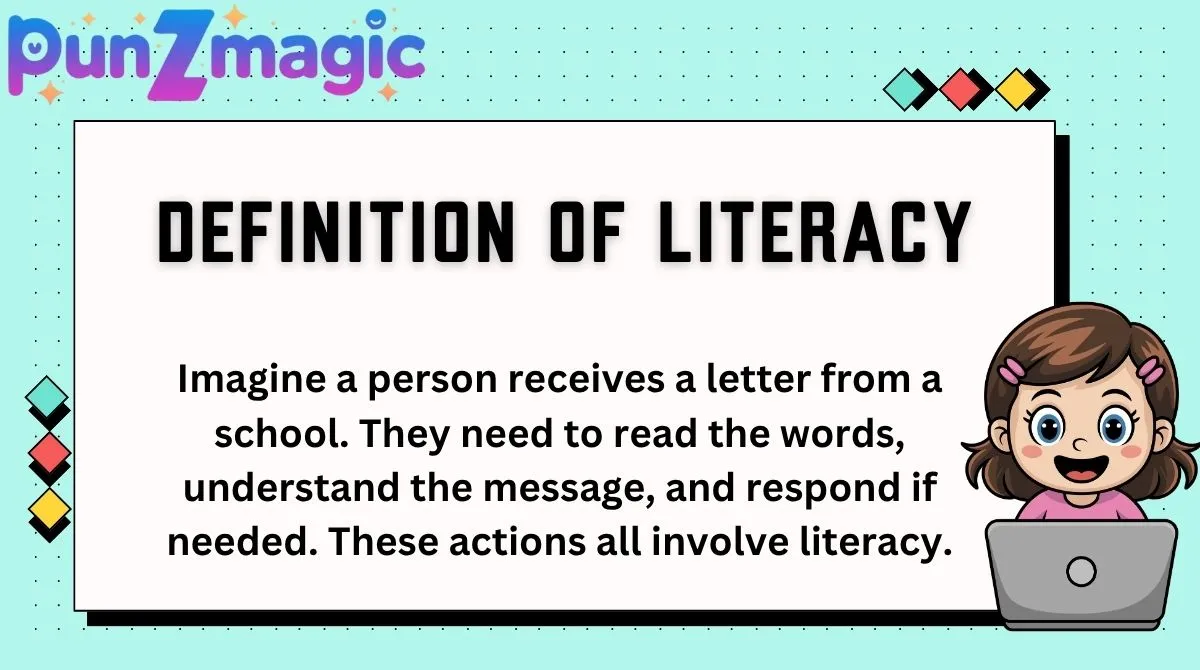
Imagine a person receives a letter from a school. They need to read the words, understand the message, and respond if needed. These actions all involve literacy.
Another example is reading a recipe. A person must understand the ingredients, measurements, and cooking steps. Simply seeing the words is not enough. They must understand and use the information.
This is why literacy is closely connected to understanding.
A simple way to remember it is:
Literacy = Reading + Writing + Understanding + Using Information
The level of literacy can differ from person to person. Someone may have strong reading skills but need more practice with writing. Another person may read well but struggle to understand complex information.
Why Is Literacy Important?
Literacy is a basic skill that affects many parts of life. It supports education, employment, communication, independence, and personal growth.
Children use literacy to learn subjects such as science, history, and mathematics. As they grow, reading and writing become important for exams, applications, research, and everyday communication.
Adults also use literacy constantly. A person may need to read a work email, understand a contract, complete a form, or compare products before making a purchase.
Good literacy skills can help people:
- Learn new information.
- Communicate clearly.
- Understand instructions.
- Solve everyday problems.
- Find and check information.
- Take part in their communities.
- Develop confidence and independence.
Literacy also supports lifelong learning. When people can read and understand information, they have more opportunities to learn without always needing someone else to explain it.
What Are the Main Types of Literacy?
Literacy is not limited to reading books. Different forms of literacy describe different skills people use in modern life.
| Type of literacy | Simple meaning | Example |
|---|---|---|
| Basic literacy | Reading and writing simple information | Reading a short note |
| Functional literacy | Using literacy in everyday tasks | Filling out a form |
| Digital literacy | Using digital tools and information | Sending an email |
| Media literacy | Understanding and evaluating media | Checking a news claim |
| Financial literacy | Understanding money and financial information | Making a budget |
| Health literacy | Understanding health information | Reading medicine instructions |
| Numeracy | Understanding numbers and basic math | Comparing prices |
These types can overlap. For example, ordering something online may require digital literacy, reading skills, and basic financial knowledge.
The main idea is that literacy helps people understand information and use it effectively.
What Is Basic Literacy?
Basic literacy is the foundation of reading and writing. It usually involves recognizing letters, understanding words, reading simple sentences, and writing basic information.
A person with basic literacy can perform simple tasks such as reading a sign or writing their name.
Basic literacy often develops during early childhood through activities such as:
- Learning letters and sounds.
- Reading simple books.
- Writing words and sentences.
- Learning new vocabulary.
- Practicing reading comprehension.
These early skills create a foundation for more advanced learning.
However, literacy development does not stop when a person learns the alphabet. People continue improving their vocabulary, comprehension, writing style, and ability to understand difficult texts throughout life.
For example, reading a children’s story and understanding a legal agreement both require reading skills, but the second task demands a much higher level of comprehension.
What Is Functional Literacy?
Functional literacy means being able to use reading, writing, and understanding skills to manage everyday life.
It connects literacy with real-world tasks.
For example, imagine someone needs to apply for a job. They may need to read the job advertisement, understand the requirements, complete an application, and write a short description of their experience.
That is functional literacy.
Other examples include:
- Reading a train timetable.
- Understanding a rental agreement.
- Writing an email to a teacher.
- Following cooking instructions.
- Reading a product label.
- Understanding a workplace notice.
- Completing an online application.
Functional literacy is important because knowledge becomes useful when people can apply it to real situations.
What Is Digital Literacy?
Digital literacy is the ability to use digital devices, tools, and online information in a safe and useful way.
Modern life depends heavily on digital technology. People use phones, computers, websites, apps, and online services for school, work, shopping, communication, and entertainment.
Digital literacy may include knowing how to:
- Search for information online.
- Send and receive emails.
- Use common computer programs.
- Create or edit digital documents.
- Protect passwords and personal information.
- Recognize suspicious online content.
- Communicate appropriately online.
For example, finding information on a website is not enough. A digitally literate person should also consider whether the information is reliable, current, and trustworthy.
This makes digital literacy closely connected to critical thinking.
How Is Literacy Different From Education?
Literacy and education are related, but they are not the same thing.
Literacy is a set of skills. Education is a broader process of learning knowledge, skills, values, and ideas.
A person can have literacy skills without completing a formal education program. For example, someone may learn to read and write outside school.
At the same time, education often depends on literacy. Students need to read textbooks, understand questions, write answers, and communicate ideas.
Think of it this way:
Literacy is a tool, while education is a larger learning process.
Literacy helps people access education, but education includes much more than reading and writing.
This distinction is useful when discussing literacy because a literacy rate does not tell us everything about the quality or amount of education people have received.
What Are Some Real-Life Examples of Literacy?
Literacy appears in ordinary activities throughout the day. People often use literacy without thinking about it.
Consider a typical morning. A person may read a message on their phone, check a weather report, read a food label, and follow directions to work. Each activity involves understanding information.
Here are some more examples:
At school:
A student reads a chapter, understands the main idea, and writes an answer.
At work:
An employee reads instructions and writes an email to a customer.
At home:
A parent reads a child’s school notice and signs a form.
While shopping:
A customer compares product labels and prices before buying something.
Online:
A user reads an article and checks whether its information comes from a trustworthy source.
These examples show that literacy is not only a classroom skill. It is part of daily decision-making and communication.
How Can Literacy Skills Be Improved?
Literacy can improve through regular practice. People do not need to read difficult books every day. Small, consistent activities can make a difference.
Reading is one of the simplest ways to build literacy. A person can read books, articles, newspapers, instructions, or topics they already enjoy.
Writing also matters. Keeping a short journal, writing emails, creating stories, or summarizing something that was read can help develop writing skills.
Other useful activities include:
- Learn a few new words each week.
- Read different types of texts.
- Ask questions about what you read.
- Write short summaries.
- Practice explaining ideas clearly.
- Discuss books or articles with others.
- Use digital tools for learning.
For children, reading together can make learning more enjoyable. Asking questions about a story can also help build vocabulary and comprehension.
For adults, practical activities such as reading workplace documents or writing everyday messages can strengthen functional literacy.
The goal is not simply to read more words. The goal is to understand and use information better.
FAQs
What is the simple definition of literacy?
Literacy is the ability to read, write, understand, and use information. It helps people communicate, learn, work, and handle everyday tasks.
What is literacy in simple words?
In simple words, literacy means being able to understand written information and communicate through reading and writing.
What are the 4 skills of literacy?
Four common literacy skills are reading, writing, listening, and speaking. These skills work together to help people understand and communicate ideas.
What is an example of literacy?
Reading a medicine label and understanding how to use the medicine is an example of literacy. Writing an email or completing a form are also examples.
What is the difference between literacy and reading?
Reading is one part of literacy. Literacy is broader and can include reading, writing, understanding information, and communicating ideas.
What are the main types of literacy?
Common types include basic literacy, functional literacy, digital literacy, media literacy, financial literacy, health literacy, and numeracy.
Why is literacy important?
Literacy helps people learn, communicate, work, solve problems, and make informed choices. It is useful in school, employment, family life, and everyday activities.
Conclusion
The definition of literacy goes beyond simply knowing how to read and write. It includes the ability to understand information, communicate ideas, and use knowledge in real-life situations.
From reading a book to sending an email or understanding a product label, literacy supports everyday life.
Traditional literacy remains important, while digital, financial, health, and media literacy have become increasingly useful. Strong literacy skills can open doors to learning, work, communication, and greater independence.

I am Elina James, a passionate wordplay lover and the creative mind behind PunzMagic. I enjoy turning simple words into clever puns that make people smile, laugh, and share joy with others.